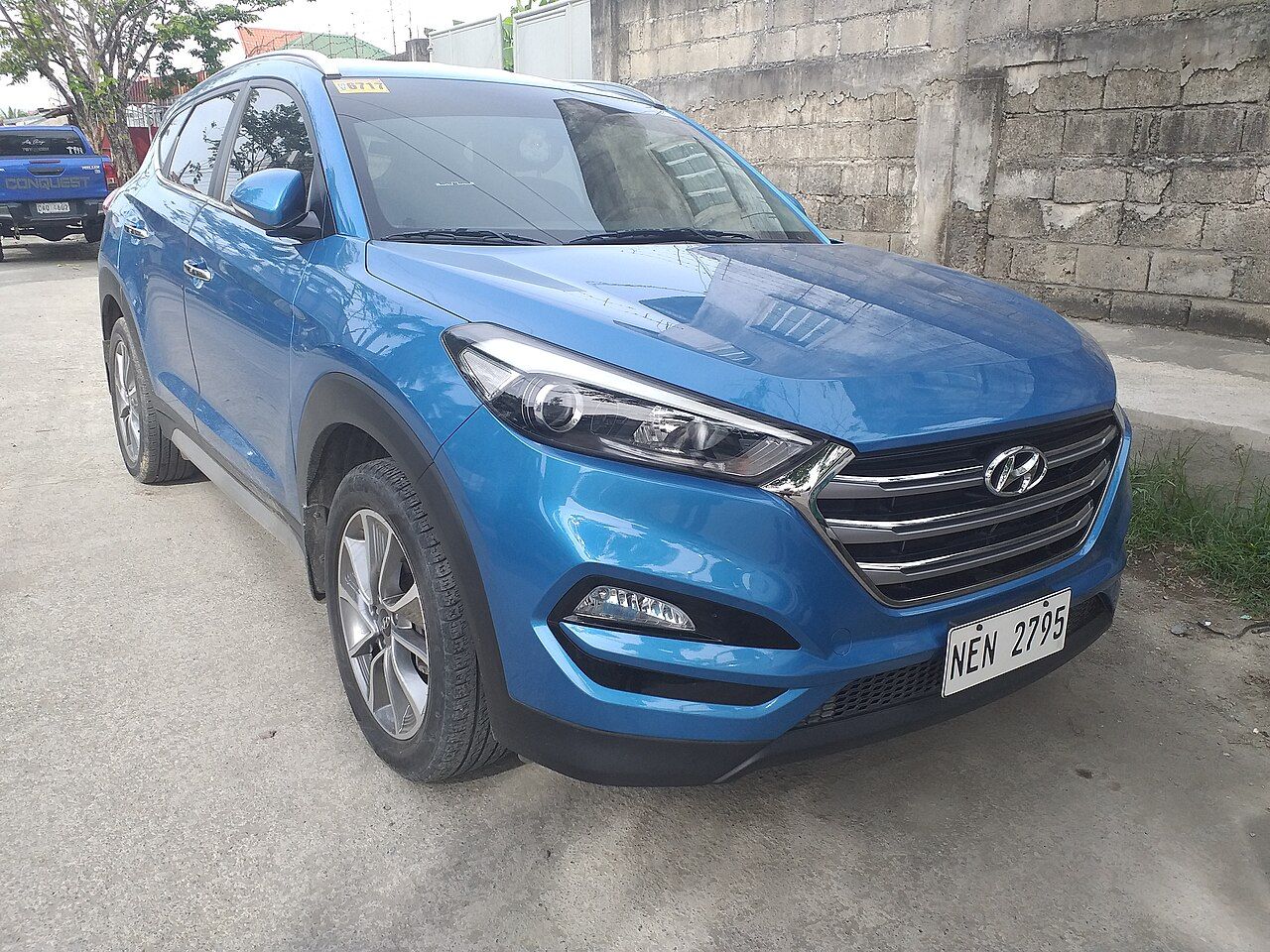
The best Tucson years to buy are 2020 and 2021. Avoid the 2016 and 2017: their dual-clutch transmission hesitates and slips, and many engines burn oil, giving them three to four times the complaints of a typical compact SUV.
Best years: 20202021 Years to avoid: 20162017
Every Tucson year compared
Owner complaints per 100,000 cars sold. Lower is better. The newest years have had less time to collect complaints, so they are marked too new to judge.
Known Tucson problems
Year by year
| Year | Complaints | Per 100k sold | Recalls | Top issue | Rating |
|---|---|---|---|---|---|
| 2024 | 155 | - | 4 | Other | Too new to judge |
| 2023 | 182 | - | 2 | Other | Too new to judge |
| 2022 | 511 | 291 | 3 | Engine | Average |
| 2021 | 80 | 53 | 1 | Engine | Good buy |
| 2020 | 179 | 145 | 1 | Engine | Good year |
| 2019 | 385 | 280 | 1 | Engine | Average |
| 2018 | 398 | 259 | 1 | Engine | Average |
| 2017 | 1,096 | 955 | 3 | Engine | Skip this year |
| 2016 | 1,626 | 1,812 | 5 | Transmission and drivetrain | Skip this year |
| 2015 | 229 | 360 | 1 | Engine | Average |
| 2014 | 203 | 429 | 2 | Engine | Average |
| 2013 | 266 | 635 | 3 | Engine | Watch out |
| 2012 | 255 | 522 | 3 | Engine | Average |
About the Tucson
The Tucson is a good value SUV whose record turned around. The 2016 redesign used a 7-speed dual-clutch automatic with the 1.6L turbo that could hesitate dangerously when pulling out, and both engines drew oil consumption complaints. Later years switched to a conventional automatic and complaints dropped sharply.
- 2012-2015: Second generation. Low sales make the rate look high; engine complaints are the main issue.
- 2016-2021: Third generation. 2016-2017 dual-clutch and engine problems; 2019-2021 are much better.
- 2022 on: Fourth generation. 2022 had a high early complaint count.
Tucson warranty extensions and special coverage
Carmakers sometimes extend the warranty on a part that fails too often, or pay for a fix outside a recall. These notices come from the dealer bulletins Hyundai files with NHTSA. 433 Tucson bulletins are on file in total.
Some Tucson (NX4A and NX4M) and Santa Cruz (NXT) vehicles may have front wipers that do not return to the designated park position due to a loose wiper motor crank arm nut.
Certain Tucson (NX4A) vehicles may have an inoperable horn that may be caused by foreign substances causing internal parts to oxidize.
Some Tucson (NX4A) vehicles may have an inoperable horn that may be caused by foreign substances causing internal parts to oxidize.
Certain Hyundai vehicles with exterior white paint may exhibit peeling or bubbling on metal body panels: hood, fender(s), roof, door(s), quarter panel(s), and tailgate/trunk.
Description: Certain Hyundai vehicles with exterior white paint may exhibit peeling or bubbling on metal body panels: hood, fender(s), roof, door(s), quarter panel(s), and tailgate/trunk.
Certain 2015 2018 model year Elantra, 2015 2019 model year Sonata, 2017 2021 model year Tucson, 2017 2018 model year Santa Fe Sport, 2019 model year Santa Fe, 2021 2023 model year Santa Fe Hybrid, and 2020 2023 model year Palis...
Some vehicles may exhibit excessive paint peeling or bubbling of the primer/paint film on the exterior metal body panels: hood, fender(s), roof, door(s), quarter panel(s), and tailgate/trunk.
Certain vehicles may exhibit excessive paint peeling or bubbling of the primer/paint film on the exterior metal body panels: hood, fender(s), roof, door(s), quarter panel(s), and tailgate/trunk.
Hyundai has developed a new engine monitoring technology called a Knock Sensor Detection System (KSDS).
Certain 2018-2019MY Accent (HC) and 2016-2017MY Tucson (TL) vehicles may experience inoperable Airbag Control Unit (ACU) and have Diagnostic Trouble Code (DTC) stored in the ECM.
Ask a dealer to check a specific car by VIN. Extensions usually have a time or mileage limit.
Government investigations into the Tucson
NHTSA opens an investigation when complaints point to a possible safety defect. Some end in a recall and some close without one.
Audit query AQ23002 · 2012, 2013, 2014, 2015, 2019, 2020, 2021 · opened Nov 2023
The Office of Defects Investigation (ODI) has received eight Hyundai Motor America (Hyundai) and eight Kia America, Inc.
Defect petition DP22005 · 2022 · opened Jan 2023, closed Aug 2023 · led to recall 22V063000
NHTSA received a petition on or about July 18, 2022, requesting that Federal Motor Vehicle Safety Standard (FMVSS) 141 be applied to all electric and hybrid vehicles operating in the United States.
Defect petition DP22003 · 2012, 2013, 2014, 2015, 2016, 2017, 2018, 2019, 2022 · opened Sep 2022, closed Dec 2023
The National Highway Traffic Safety Administration (NHTSA) received a letter dated July 13, 2022, petitioning the Agency to initiate a safety defect investigation into loss of motive power allegations attributed to oil drain pan assembly failures on certain Hyundai Motor America, Inc.
Engineering analysis EA21003 · 2012, 2017 · opened Dec 2021, closed Feb 2024 · led to recall 23V877
On March 29, 2019, the Office of Defects Investigation (ODI) opened two Preliminary Evaluations (PE19-003 on Hyundai and PE19-004 on Kia) to broadly investigate incidents of non-crash fires (regardless of origin or operational status of the vehicle) on various model year Hyundai and Kia vehicles.
Tucson vs rivals
Questions
What is the best year for the Hyundai Tucson?
2020 and 2021. The best Tucson years to buy are 2020 and 2021. Avoid the 2016 and 2017: their dual-clutch transmission hesitates and slips, and many engines burn oil, giving them three to four times the complaints of a typical compact SUV.
Which Hyundai Tucson years should I avoid?
2016, 2017. These drew far more owner complaints per car sold than the Hyundai Tucson average.
Should I park my Tucson outside?
Recall 20V543 covers 2016-2021 Tucsons whose ABS module can short and cause a fire, even when parked. Until the recall is done, Hyundai advised parking outside and away from buildings.
Based on 5,565 complaints filed by owners with U.S. safety regulators for model years 2012 to 2024, and U.S. sales by calendar year. How we score.