Every year page on this site shows the car’s crash test stars when they are available. They come from the New Car Assessment Program, run by the National Highway Traffic Safety Administration. Here is what they mean.
The tests
Frontal crash. The car hits a fixed barrier at 35 mph, with crash test dummies in the front seats. The rating reflects the chance of serious injury to the driver and front passenger.
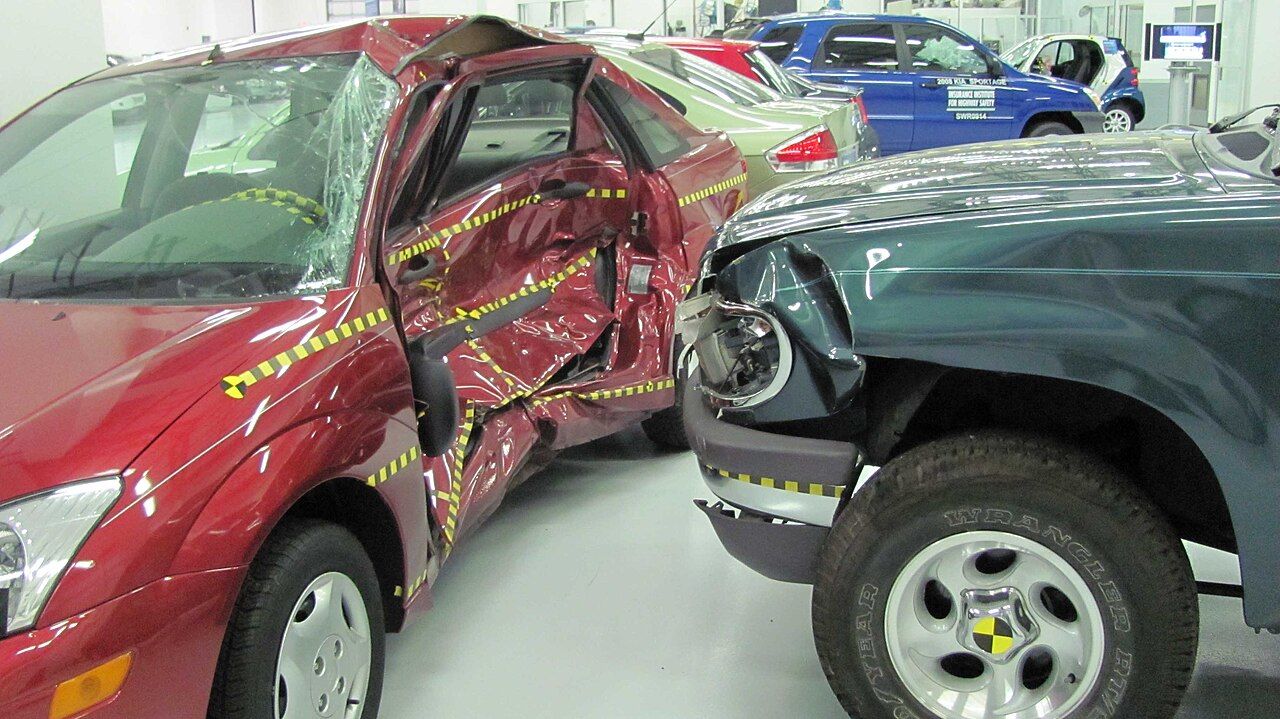
Side crash. Two tests. In one, a barrier the weight of a mid-size car hits the side at 38.5 mph. In the other, the car slides sideways into a pole at 20 mph, like skidding into a tree.
Rollover resistance. A measure of how likely the car is to roll over in a single-vehicle crash, based on its width and center of gravity plus a driving test. Taller vehicles like SUVs and trucks usually score lower here.
Overall. A combined score from the frontal, side and rollover results.
What the stars mean
More stars means a lower chance of serious injury in that test. Five stars is the best result. The difference between four and five stars is real but smaller than the difference between a modern car and a much older one.
Comparing cars
- Compare within similar sizes. Frontal crash results are only comparable between vehicles within about 250 pounds of each other, because in a real crash a heavier vehicle has an advantage.
- Check the test year. The tests changed in 2011, so ratings from before then cannot be compared with later ones.
- Look at each test, not just the overall. A car with five stars overall can still have four stars in one test.
What the ratings do not cover
- Reliability. A five-star car can still have an engine or transmission that fails. That is what the complaint data on our pages is for.
- Crash avoidance. Features like automatic emergency braking and blind spot warning prevent crashes but are not part of the star rating.
- Every version of a model. Ratings can differ between body styles and drive types. Our pages show the version that was tested.
Questions
Why does a model have no rating for a year? Not every model is tested every year. If the car was not changed, the earlier rating often carries over. If no rating is shown, none was published for that year.
Are crash ratings the same as safety recalls? No. A recall is for a defect that was found later. A car can have a top crash rating and still have open recalls, so check both.