A clean-looking used car can still have flood damage. Before buying, check its title history, inspect places that are difficult to clean, and arrange an independent inspection. A fresh interior, a normal test drive, or a report without a flood entry cannot settle the question by itself. If the evidence conflicts, pause the purchase until someone qualified can explain it.
Flood exposure matters because the consequences may outlast the visible mess. NHTSA warns that problems can appear long after a vehicle has been cleaned and offered for sale. It also warns that affected vehicles may be sold far from the original disaster area. Shopping in a dry state does not remove the need to check where the car has been.
Start with the car’s identity and paperwork
Get the vehicle identification number before arranging a visit. Compare it with the VIN on the vehicle, its title, the seller’s documents, and any history report. A report for a similar car is no help. Ask specifically whether the car has been flooded, declared a total loss, or given a salvage or rebuilt title. Request the answer and any promises in writing.
A branded title deserves attention, but the absence of a brand is not proof that the car has never been wet. NHTSA specifically cautions buyers about flood-damaged vehicles offered with clean or supposedly lost titles. The agency points buyers to the National Motor Vehicle Title Information System for checking title history. Access it through the official government information linked by NHTSA or the FTC, rather than an unfamiliar link supplied in a sales message.
Read the actual entries instead of relying on a report’s headline. Note any flood, salvage, or insurance-loss record and ask how it relates to the vehicle being offered. Keep the report with the purchase documents. Treat it as one source of evidence, not as an inspection certificate or a promise that future repairs will be covered.
Inspect the interior before being distracted by the paint
Visit in daylight and allow enough time to look without pressure. Open the doors and trunk. A musty odor is a warning sign; heavy fragrance may also warrant questions because it can conceal odors. Neither observation proves flooding. Your task is to identify an issue that needs investigation, not to diagnose the car from a smell.
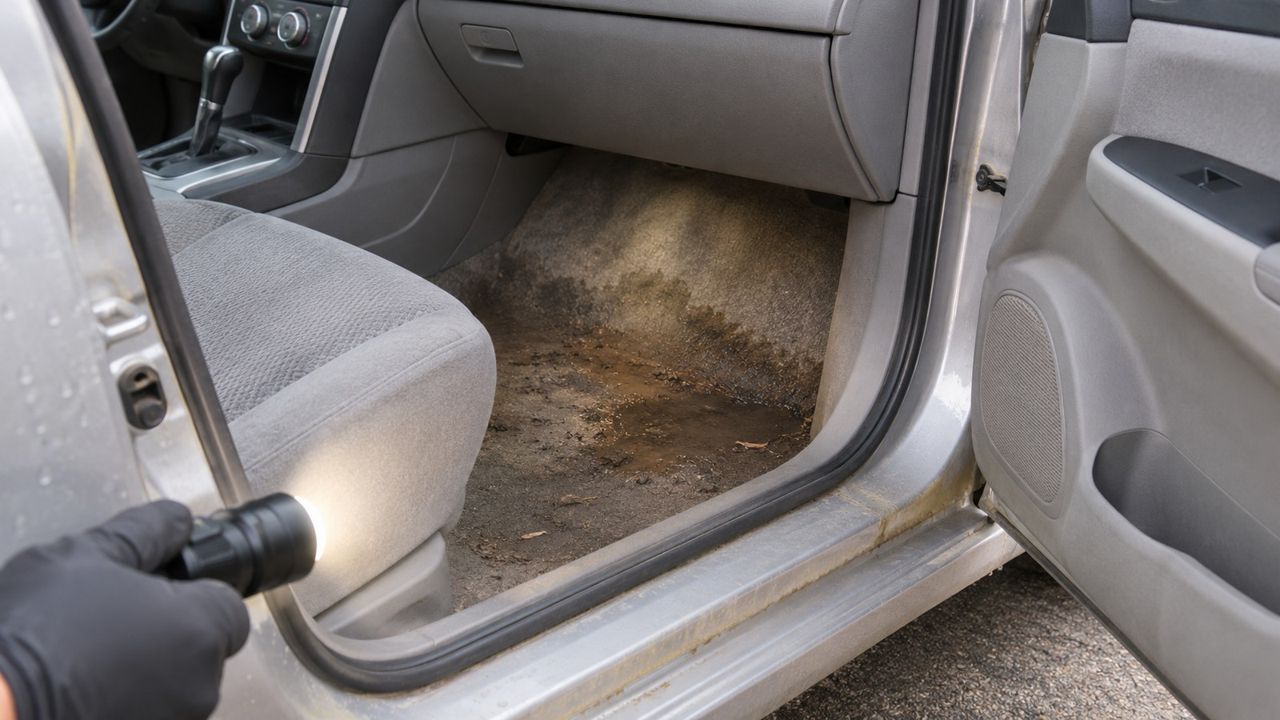
Look at the carpet, lower trim, trunk, glove compartment, and accessible areas under the dashboard. NHTSA identifies mud, unusual dirt, and waterlines in hidden locations as possible evidence. Use a flashlight where necessary, but do not remove electrical connectors, airbag components, or trim that you do not have permission or training to remove. Ask the inspecting technician to investigate anything you cannot safely see.
Compare the condition of different areas. If the seats appear freshly cleaned but the trunk contains unexplained sediment, record that discrepancy. Ask why carpet or upholstery was replaced and request the repair invoice. New material can have an innocent explanation; a documented explanation is more useful than a confident verbal assurance.
Look for a pattern rather than one isolated clue
Rust and corrosion need context. NHTSA advises looking for an unusual amount relative to a vehicle’s age and location. That does not mean every rusty fastener identifies a flood car. Have the inspector distinguish ordinary exposure and wear from evidence that deserves further investigation.
Use this short checklist to keep the visit organized:
| Observation | What to request next |
|---|---|
| Musty odor or unusually heavy fragrance | An explanation and a closer interior inspection |
| Mud or a waterline in a hidden area | A professional assessment of possible water intrusion |
| Unexplained replacement carpet or seats | Dated invoices identifying the reason for replacement |
| Flood, salvage, or rebuilt title history | Supporting records and an independent assessment |
| Seller refuses an independent inspection | Consider another vehicle |
Photograph concerns with the seller’s permission. Describe what you see without guessing the cause. “Sediment beneath the trunk floor” gives a technician something specific to inspect. “The car must have been underwater” jumps ahead of the available evidence.
Arrange an inspection that addresses water exposure
Tell the independent mechanic about your concern before booking. Send the VIN, title information, and photographs, and ask whether the shop can assess suspected flood damage. A routine safety check is not the same as a comprehensive mechanical inspection. The FTC makes this distinction and recommends an independent inspection even when a dealer has certified the car or offers a warranty.
Ask for written findings identifying the vehicle and the work recommended. If the inspector cannot determine the extent of the damage without further investigation, that uncertainty belongs in the purchase decision. Do not turn an incomplete inspection into a clean bill of health simply because no immediate fault was confirmed.
The FTC suggests alternatives when a dealer will not permit the car to leave the lot: a mobile inspection or a visit to a facility you select. If the seller blocks independent inspection altogether, choosing another vehicle is a reasonable response. A discount does not explain an unresolved waterline or replace missing repair documentation.
Take extra care with hybrids and electric vehicles
A flooded high-voltage vehicle is not a do-it-yourself inspection project. NHTSA warns that flood exposure can damage lithium-ion batteries and create shock or fire hazards. Do not touch exposed electrical components, open a traction-battery enclosure, or attempt to charge a vehicle suspected of having a damaged battery.
Tell the shop that the vehicle is a hybrid or electric model and describe the suspected exposure. Let appropriately trained personnel decide what examination is safe. A battery warning or visible damage should be resolved before a test drive, not treated as something to investigate after buying.
Questions
Does a clean title rule out flood damage? No. NHTSA warns that flood-damaged vehicles can be offered with clean or fraudulent titles. Check the history and the physical vehicle together, and use an independent inspection to investigate concerns.
Can a flood-damaged car look and drive normally? Yes. Cleaning can remove obvious evidence, and NHTSA cautions that problems may appear later. A short drive cannot establish the condition of every affected component.
Should I buy if the seller promises to fix anything that breaks? Do not rely on an oral promise. Obtain the exact written terms and an independent inspection first. If the extent of water damage remains uncertain, consider a different car rather than assuming the promise covers every consequence.